
Herniated Disc: Non-Surgical Options Worth Trying First
Hearing that an MRI shows a herniated disc sounds like a verdict. It usually is not. Disc herniations are common findings even in people with no symptoms at all, and the majority of the ones that do cause symptoms settle down over weeks to months without surgery. The body reabsorbs herniated material more often than most patients are told.
Why the image is not the whole story
Two people can have nearly identical scans and completely different lives. What matters clinically is whether the exam findings line up with the image: does the weakness, the reflex change, and the pain pattern match the level the MRI flagged. When they match, the picture is meaningful. When they do not, the scan is describing a bump that was probably always there.
This is the single most useful reason to have an exam interpreted by someone who will correlate it rather than read the report to you.
What conservative care involves
Relative rest early on, then graded movement. Specific exercise that centralizes symptoms, meaning it pulls the pain back toward the spine and out of the leg, is one of the more reliable signs that a direction of care is right for you.
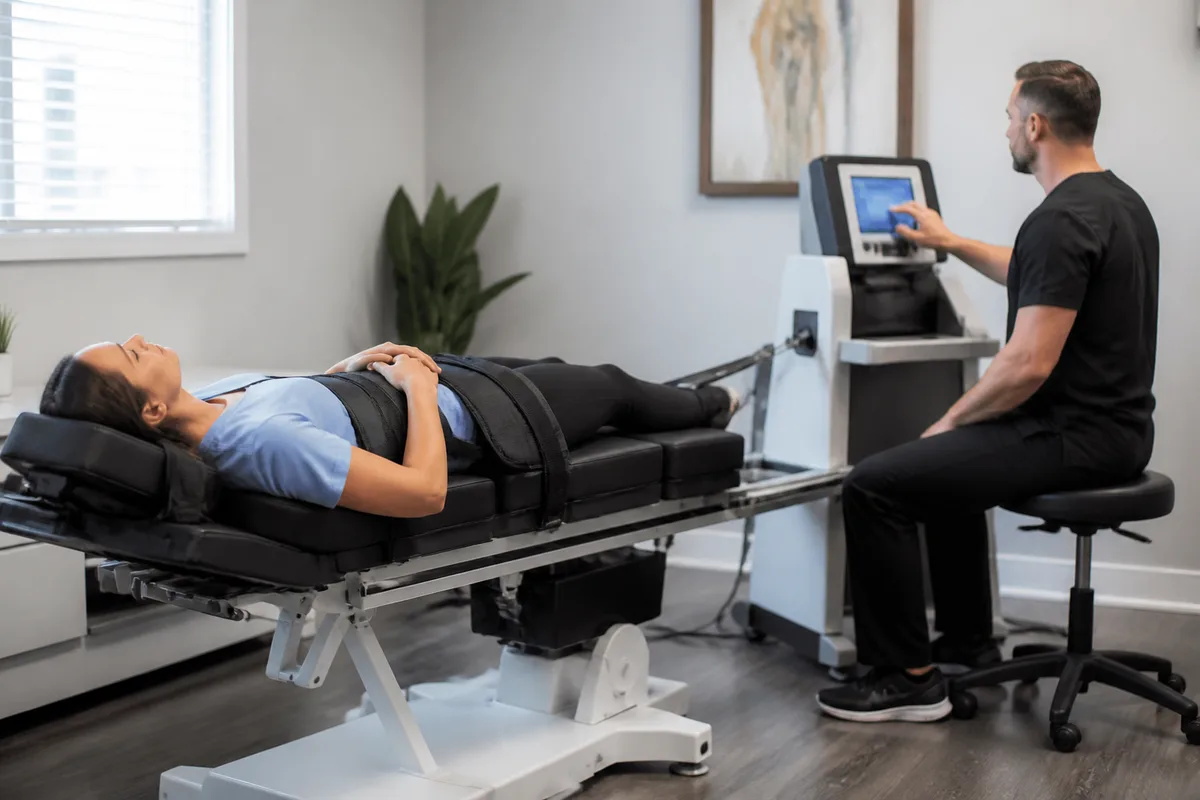
Manual therapy and mobilization to restore movement at stiff segments. Traction or spinal decompression to reduce pressure across the disc. Modalities such as electrical stimulation, therapeutic ultrasound, or cold laser to manage pain enough that you can do the loading work that produces the lasting change.
Medication and, in some cases, an epidural steroid injection can lower inflammation around the nerve root. These are best understood as a window that lets rehabilitation proceed, not as the treatment itself.
How to tell it is working
The most encouraging early sign is centralization: leg pain retreating upward even if back pain temporarily stays the same. Strength returning and the numb patch shrinking count too.
Set a checkpoint. Six weeks of consistent conservative care with no measurable change in pain, function, or neurological findings is a reason to escalate the workup rather than to keep repeating the same plan.
When surgery becomes the right conversation
Progressive muscle weakness, symptoms that stay severe after a genuine trial of conservative care, or signs of significant nerve compression move surgery up the list. So does any loss of bladder or bowel control, which is a same-day emergency.
For everyone else, the sequence that serves most people is conservative care first, escalation on evidence, and surgery as a decision made with a surgeon who has seen how you responded to everything else.
Questions about your own care? The team at Zeren Health is happy to help — call us at (718) 733-1000 or request an appointment.
This content is for general information only and isn't medical advice. Check with your provider or doctor before you start a new exercise or treatment. If you have a medical emergency, call 911.