
Morning Heel Pain: Understanding Plantar Fasciitis
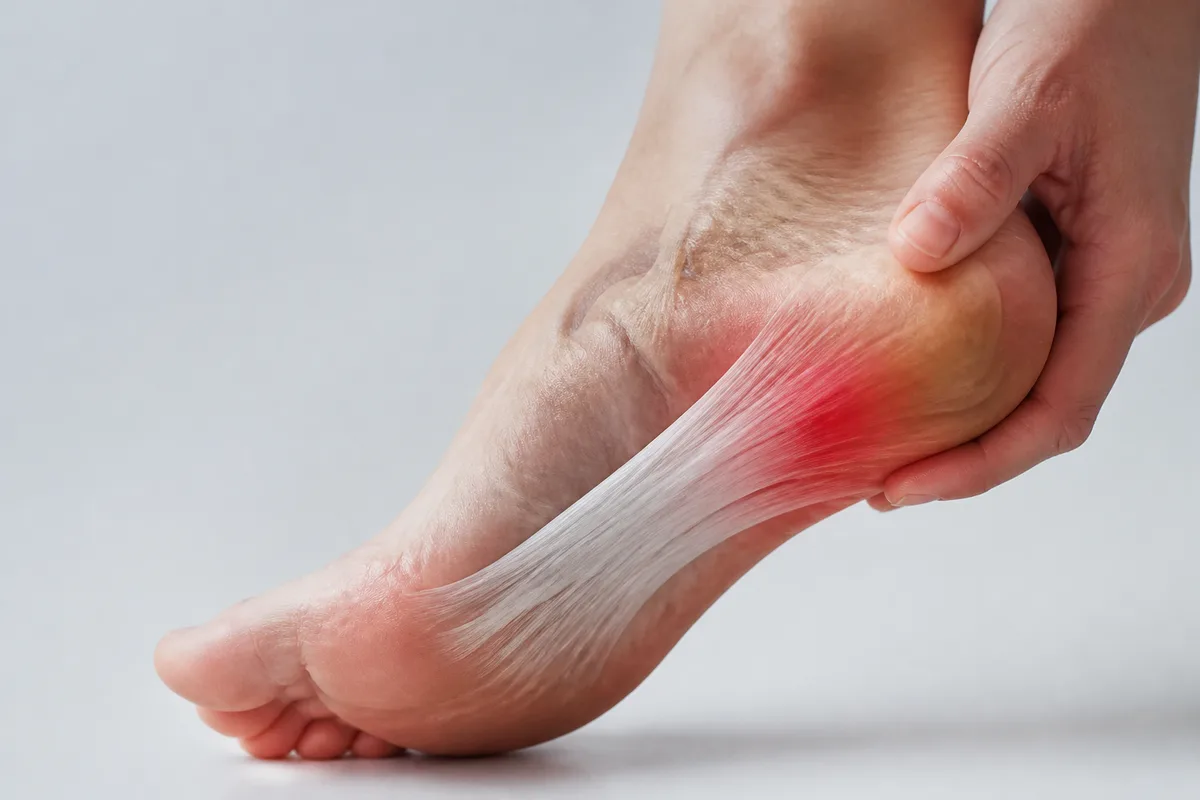
The description is so consistent that it is nearly diagnostic on its own: the first few steps in the morning feel like stepping on a stone, it eases after walking for a few minutes, and it comes back with a vengeance after sitting for a while. That is the classic pattern of plantar fasciitis, an irritation of the thick band of tissue running along the bottom of the foot from the heel to the toes.
Why the first step is the worst one
Overnight, the foot rests in a pointed position and the tissue shortens slightly. The first weight-bearing steps stretch it abruptly, which is what produces the sharp heel pain. The same thing happens on a smaller scale after any long stretch of sitting.
This is also why a night splint that holds the foot at a neutral angle helps some people noticeably: it removes that morning stretch entirely.
What sets it off
Usually a change rather than a single event. A jump in walking or running mileage, a new job on hard floors, worn-out shoes, a period of significant weight change, or tight calves that shift load onto the foot.
Foot structure plays a part, but it is rarely the whole explanation. Plenty of people with flat feet or high arches never develop it, which is why treatment that only addresses arch shape often disappoints.
What actually helps
Calf and plantar fascia stretching, done consistently, is the least glamorous and most reliable piece. Progressive loading exercises for the foot and calf outperform stretching alone in most cases.
Supportive footwear worn from the moment you get out of bed, rather than crossing a tile floor barefoot first. Over-the-counter inserts help many people; custom orthotics are worth considering when the exam finds a mechanical issue those will not address.
When symptoms persist, in-office options such as therapeutic ultrasound, shockwave therapy, manual therapy for the calf and foot, taping, or an injection can move things along. Surgery is a last resort and is rarely necessary.
How long it takes
Longer than anyone wants to hear. Several months of consistent work is a normal course, and the pattern is a gradually shorter painful window in the morning rather than a sudden absence of pain. Stopping the program as soon as it feels better is the most common cause of a relapse.
Get it looked at sooner if the pain came on suddenly after a distinct pop, if there is numbness or burning rather than sharp mechanical pain, if the heel is swollen and warm, or if three months of honest effort has changed nothing. Each of those points at something other than straightforward plantar fasciitis.
Questions about your own care? The team at Zeren Health is happy to help — call us at (718) 733-1000 or request an appointment.
This content is for general information only and isn't medical advice. Check with your provider or doctor before you start a new exercise or treatment. If you have a medical emergency, call 911.