
What an EMG Nerve Test Can Tell You
When numbness, tingling, or weakness will not resolve, an image can only take you so far. An MRI shows anatomy. An EMG with nerve conduction studies shows function: whether a nerve is actually conducting signals normally, where along its path the trouble is, and how long it has likely been going on.
The two halves of the test
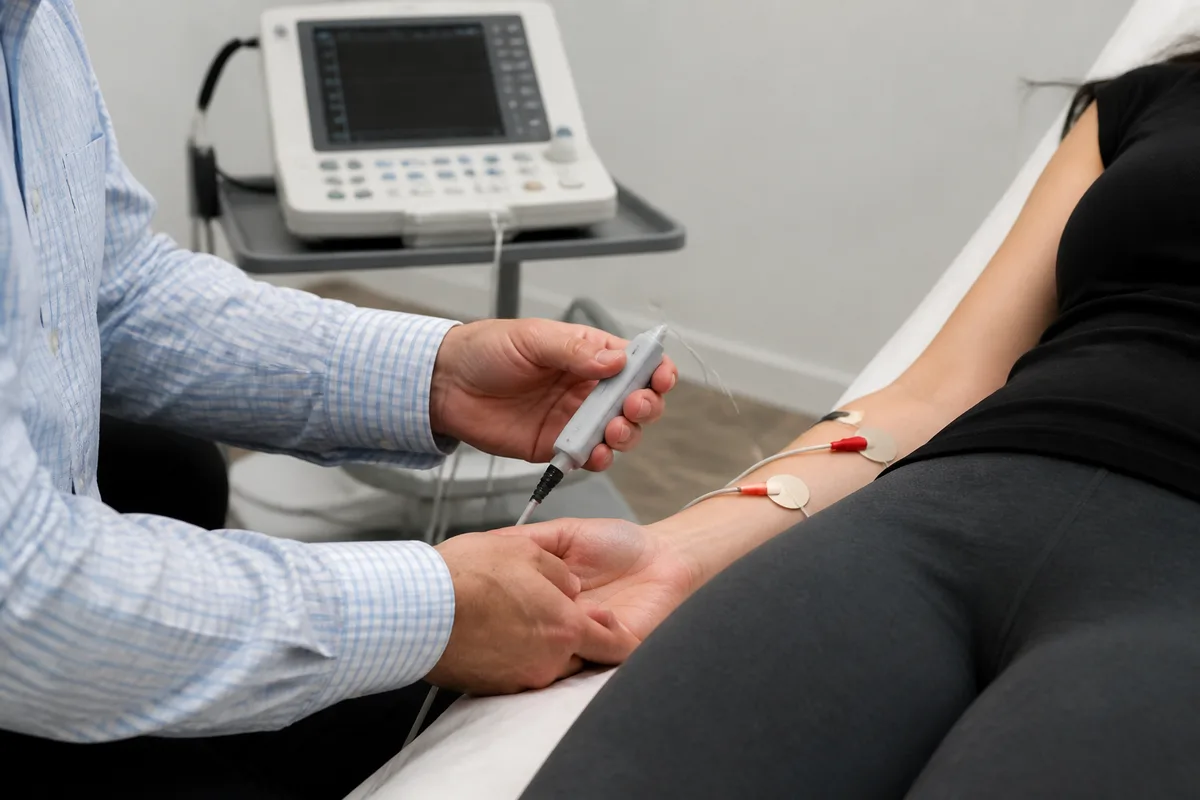
The nerve conduction study comes first. Small surface electrodes are placed on the skin and brief electrical pulses stimulate a nerve while the response is timed and measured. Slow or weak conduction points to where the signal is being interrupted.
The needle EMG follows. A very fine needle electrode is placed into selected muscles to listen to their electrical activity at rest and during gentle contraction. Muscles supplied by an irritated nerve produce a recognizably different pattern than healthy ones.
What it is good at answering
Whether leg symptoms are coming from a compressed nerve root in the spine or from a nerve entrapment lower down. Whether hand numbness is carpal tunnel syndrome, a neck problem, or both at once, which is more common than people expect.
It also helps distinguish nerve problems from muscle problems, estimate how severe and how old the injury is, and provide an objective baseline to compare against after treatment. For work and motor vehicle injury claims, that objectivity carries weight that a description of symptoms does not.
What it feels like
The stimulation pulses feel like quick static shocks: startling, brief, and over quickly. The needle portion is often described as a deep ache or cramp in the muscle rather than a sharp jab, and the needles are much finer than the ones used to draw blood.
Most studies take thirty to sixty minutes depending on how many nerves are examined. You can drive yourself home afterward. Mild soreness or a small bruise at a needle site for a day is normal.
How to prepare
Skip lotions and creams on the area that day, since they interfere with the electrodes. Wear or bring loose clothing that allows access to the limb being tested, and keep the area warm on the way in, because cold skin slows conduction and can skew readings.
Tell the office in advance if you take blood thinners, have a pacemaker or implanted stimulator, or have a bleeding disorder. None of these automatically rule the test out, but they change how it is performed.
After the test
Results are interpreted alongside your exam and any imaging, not in isolation. The most useful outcome is a narrower question: this nerve, this level, this severity, which is what turns a general complaint into a treatment plan someone can actually target.
Questions about your own care? The team at Zeren Health is happy to help — call us at (718) 733-1000 or request an appointment.
This content is for general information only and isn't medical advice. Check with your provider or doctor before you start a new exercise or treatment. If you have a medical emergency, call 911.